Italian Design Heritage: The Architectural Rebirth of Palazzo Gallia
How Studio Marco Piva merged the Belle Époque monumentalism of 1932 with radical contemporary glass, custom bronze joinery, and an unprecedented alliance of Lombard industrial designers.
A Monumental Dialogue: 1930s Monumentalism vs. Modern Precision
When Excelsior Hotel Gallia first opened its doors in 1932, it was hailed as a masterpiece of late Art Nouveau and burgeoning Novecento Italiano architecture. Its soaring facades, intricate pilasters, and ornate balconies faced the newly constructed Milan Central Station, symbolizing an era of rapid industrial expansion and trans-continental railway travel. However, by the early 2000s, the structure required an intervention that honored its heritage status while radically updating its functional spine.
Entrusted to the globally renowned Milanese architecture practice Studio Marco Piva, the transformation was conceived as an architectural dialogue rather than a conservative replication. The historic palace was stripped to its structural core, restored under the supervision of the Milanese Monuments and Fine Arts Department, and linked to a brand-new contemporary building wrapped in a curtain wall of silk-screened glass and bronze-anodized aluminum.
The Iconic 30-Metre Murano Chandelier: A Masterpiece of Illumination
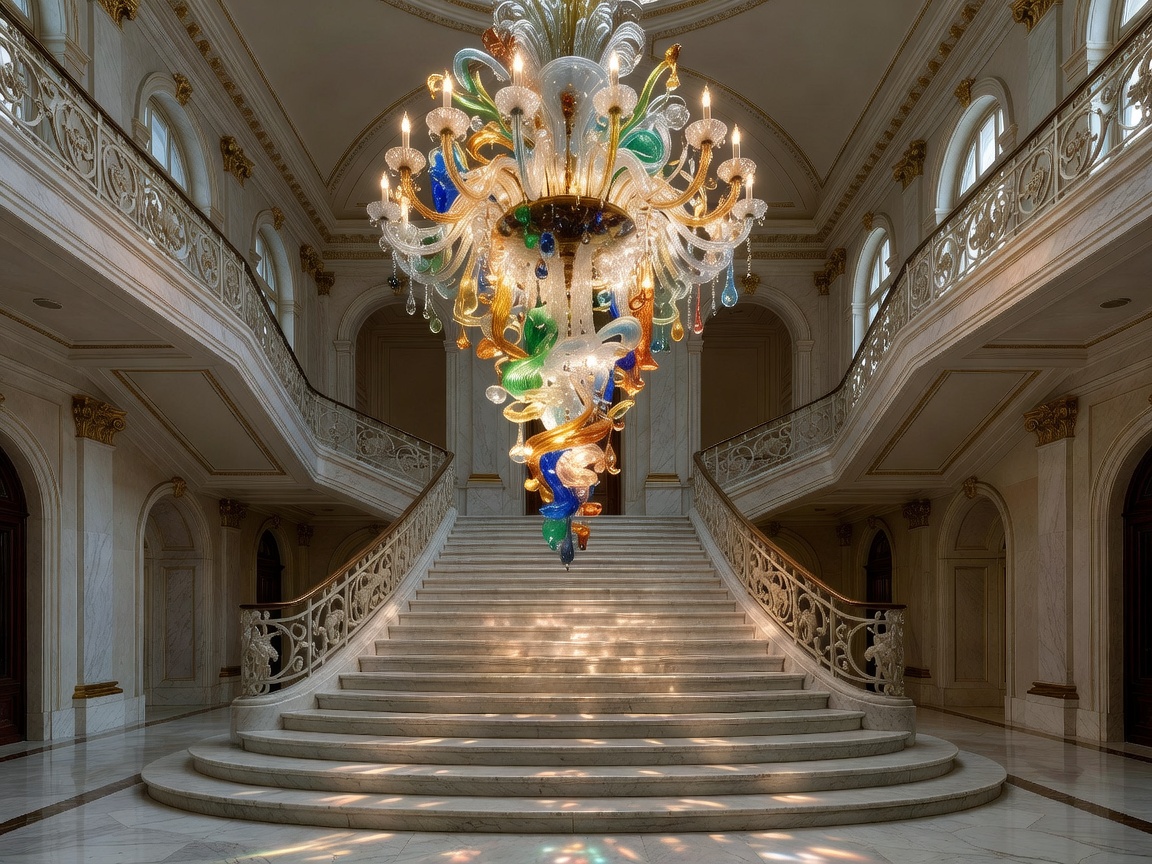
The hotel's primary vertical spine is anchored by the historic grand staircase, where Studio Marco Piva placed one of the most audacious site-specific lighting installations in contemporary hospitality: a continuous 30-metre cascade of hand-blown Murano glass droplets executed by master Venetian glassmakers. Suspended from the topmost dome down into the basement level, this luminescent column catches ambient natural light during the daytime and reflects shimmering warm gold hues across the stairwell at dusk.
"Light in Milan is never harsh or careless; it is diffused through mist, reflected on wet flagstones, and filtered through courtyards. In the Gallia project, we treated light as a tangible architectural building material."
The Pantheon of Italian Collaborators
Studio Marco Piva avoided the conventional hospitality pitfall of generic catalogue fit-outs. Instead, the firm partnered with Italy’s most prestigious design and furniture houses to craft custom collections exclusively for the hotel:
- Poltrona Frau: Crafted the bespoke leather armchairs, tufted headboards, and executive study desks finished in saddle stitching.
- Cassina: Produced the modernist seating compositions in public salons and executive lounges, referencing the mid-century golden era of Milanese industrial form.
- B&B Italia: Supplied sleek millwork, architectural cabinetry, and custom joinery that conceal luggage storage and environmental controls.
- Flos: Engineered customized ambient and task luminaires, balancing energy-efficient LED modules with diffuse satin-finish glass diffusers.
- Fiam Italia: Fabricated mirrored glass panels, curved display consoles, and reflective interior wall cladding throughout corridors and suites.
Architectural Specifications & Material Analysis
| Design Feature | Material Execution | Design Intention |
|---|---|---|
| Lobby Facade Glass | Double-glazed silk-screened structural panels | Reduces solar heat gain while filtering daylight into the grand vestibule |
| Public Floor Finishes | Italian Marquinia marble and brown Botticino | Reflects traditional Milanese Galleria Vittorio Emanuele patterns |
| Bronze Portals | Hand-brushed architectural bronze alloy | Frames historic doorways, transitioning visitors between old and new wings |
| Textile Ensembles | Rubelli silk velvets and Italian wool tweeds | Imparts acoustic damping while celebrating Milanese sartorial craft |
The Milanese Fashion Connection
Design in Milan is inseparable from fashion. Studio Marco Piva reflected the sartorial precision of the Quadrilatero della Moda—the nearby fashion district encompassing Via Montenapoleone and Via della Spiga. Textures throughout the hotel echo tailored menswear: charcoal pinstripes in wall paneling, houndstooth and herringbone weave patterns in corridor carpeting, and exposed leather seams reminiscent of handmade Italian footwear.
This subtle sartorial layering distinguishes Excelsior Hotel Gallia from international corporate flags. Rather than an anonymous luxury box, it reads as a deeply researched tribute to the industrial and creative genius that has made Milan Europe’s capital of design, architecture, and style.